People
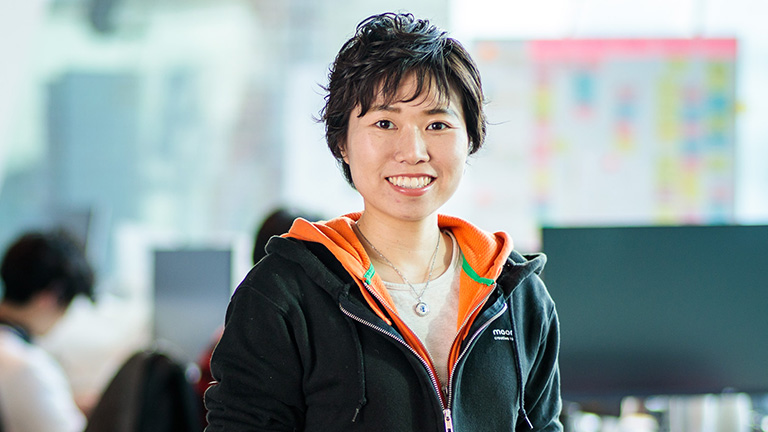
Yuki Yaguchi
Mitsui & Co. (U.S.A.), Inc.
Director, Data Driven Management
Integrated Digital Strategy Dept.
Corporate Planning Div.
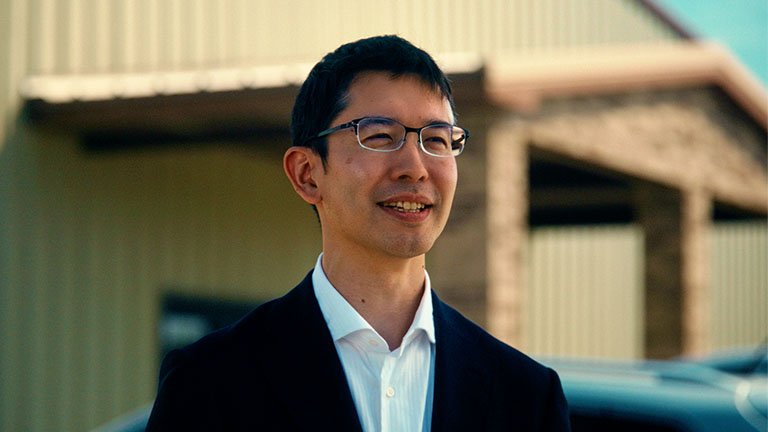
The United States is home to all the leading players in the data business and New York-based Yuki Yaguchi is deploying the very latest in data analytics in a bid to revolutionize how Mitsui & Co. operates worldwide.
Bringing data-driven management to Mitsui & Co.
I'm based in New York where I'm creating a system that leverages AI and data analytics to transform the way Mitsui Group operates globally. (*As of December 2025)
The "democratization of data" is the key concept behind what I am doing. In practice, that means equipping every employee on the business frontlines with the latest analytics tools so they can make data-backed decisions on a routine, everyday basis without any input from data scientists. Doing that drives the enhancement of corporate value. This approach is known as data-driven management, or DDM for short.
I launched Mitsui's DDM initiative myself, starting from zero. Over time, top management came to see the value of my efforts and put me in charge of the DDM Task Force in New York in 2022, and then at the Tokyo HQ in 2025. Currently, the DDM initiative oversees more than 150 data projects across roughly 100 organizations, including Mitsui Group companies and multiple Mitsui business divisions. The projects cover a wide variety of fields: food retailing, mobility, chemicals, wellness, energy, and beyond.
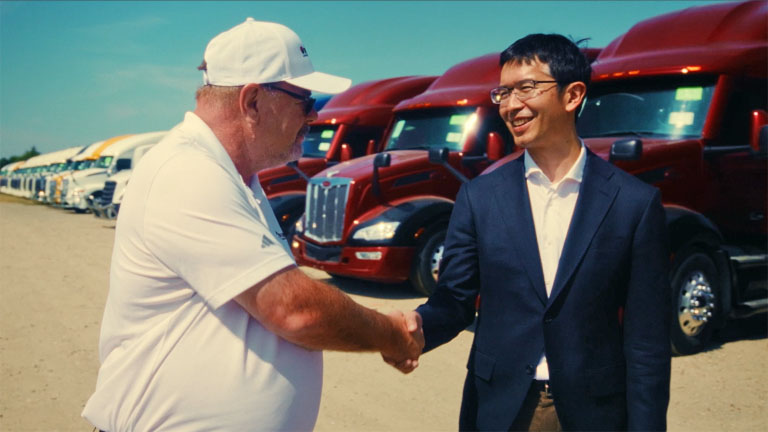
Let me give you one example. Taylor & Martin is a Nebraska-based auctioneering company that became a Mitsui subsidiary in 2024. It specializes in trucks and serves the entire United States. The company had a vast trove of auction data that had not been fully exploited. We leveraged the data to develop two things: a price prediction tool and a precisely targeted marketing methodology.
The ability to offer precise predictions for winning bids enables Taylor & Martin to win the trust of prospective sellers. Meanwhile, having automatically generated lists of bidders who narrowly lost in previous auctions makes it possible to target this group with just the right marketing messages and bid lots to pique their interest. Focusing closely on customers with proven intent to buy is a clear efficiency gain.
Having first built a successful track record in the United States, the DDM initiative has expanded its footprint to Europe, the Middle East, the Asia-Pacific region, and Mitsui & Co.'s Tokyo head office. In April 2026, Mitsui & Co. is going to be established the Group Data Driven Management Strategy Department at its Tokyo head office, and I will be returning to Tokyo to lead the company's global DDM initiatives. Looking ahead, our goal is to transform how the Mitsui Group operates by embedding DDM across the organization.
Sogo shosha professional by day. Data scientist by night
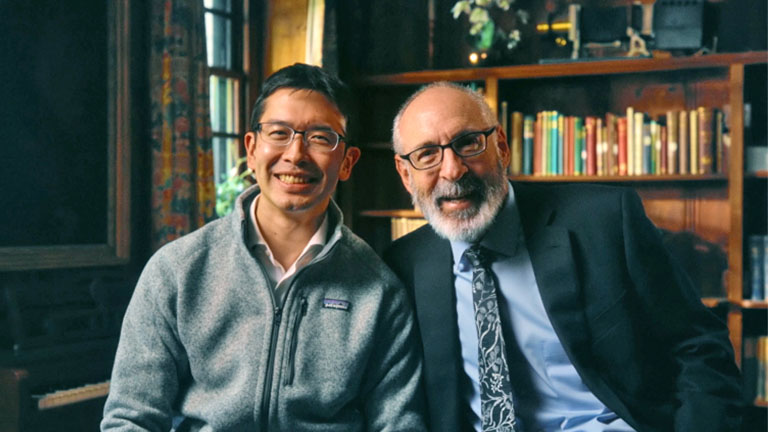
I really woke up to the potential of data and AI while I was at Harvard Business School, which I attended with sponsorship from Mitsui.
Typically, building up a personal and professional network is one of the key reasons people do an MBA, but the Covid pandemic put paid to any normal socializing among my student cohort. Keen to make the most of a less-than-ideal situation, I really threw myself into the study of data science. I just knew in my bones that it could have a massive, positive impact on Mitsui.
Now, when I reread the progress reports I sent to Mitsui from HBS, I see that, from about halfway into the course, the only thing I'm talking about is the possibility of massive value creation through combining data science with business operations and management. In fact, I ended up cross-registering for a data science program at Harvard's Institute for Applied Computational Science so I could explore how to integrate the two fields and unlock tremendous business value. That's how captivated I was by data science.
After graduating HBS in 2021, I was assigned to Mitsui & Co. (U.S.A.) in New York. Eager to put what I'd learned into practice, I independently launched a data initiative. During the day, I did my main job, then at night I focused on my personal data science projects. It was like an internal startup.
I had no mandate and no team. Regardless, I was really psyched. I proposed possible data projects to the management of different Mitsui group companies, and I spent night after night building my own machine learning models and showing off its capabilities.
Things just snowballed from there. After about 18 months, management saw the worth of what I was doing. They let me devote the first 50%—then 100%—of my resources to the DDM initiative, and my team started to grow. I was especially thrilled when someone with a master's in data science from a top US university joined us because my vision resonated with them. It was same story when other colleagues volunteered to be part of this initiative.
A single employee starts working on a side project. Other people join in. Management eventually recognizes the project's potential. And now we're getting a shot at revolutionizing the way all of Mitsui with its 56,000 employees [as of March 2025] operates worldwide. But that's Mitsui's corporate culture for you. Whatever happens, I really want to live up to the firm's expectations.
Bringing genba consciousness into the world of data
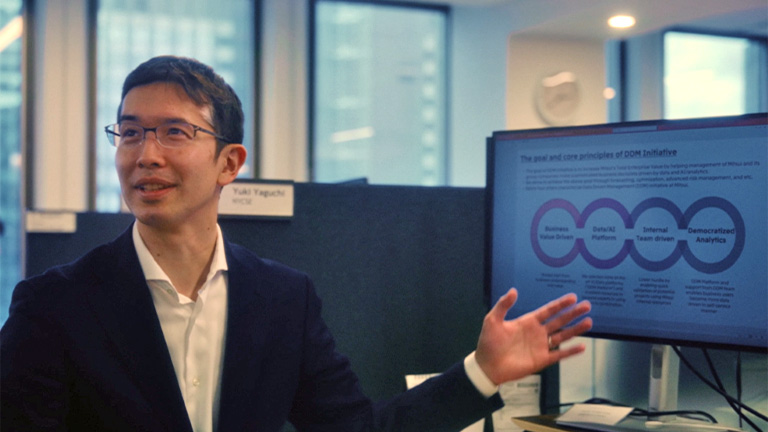
When I look back over my career, I can see that everything I've ever done at Mitsui had a data angle to it.
Analyzing the profits from over 1,000 shale gas wells. Optimizing the delivery network of an online supermarket. Exploring startup investment opportunities in the digital marketing space. The DDM initiative I'm now in charge of is basically me combining everything I learned at Harvard with all my past experience on the business frontlines—what we in Japanese call the genba.
For me, DDM is about putting power into the hands of people on the business frontlines. Because at the end of the day, they're the ones who use the data. That's why the analytics platforms that we partner with and the solutions we develop internally need to be easy to use in a real-world, day-to-day work context. Anything else would be meaningless.
Come to think of it, I probably decided to join Mitsui because I liked the genba mentality—that practical focus on frontline operations—I picked up on in the existing employees I met during the hiring process.
Recently, though, I feel that the implications of the word genba are changing. Whether it's about understanding customers or getting a feel for a specific market, leveraging data analytics across a range of scenarios is an essential skill for anyone working at a conglomerate in the twenty-first century who wants to be properly attuned to the genba.
Through DDM, I want to be the first person to bring genba consciousness—a deep operational awareness—into the world of data.
Creating Combinatory Value as the Mitsui group
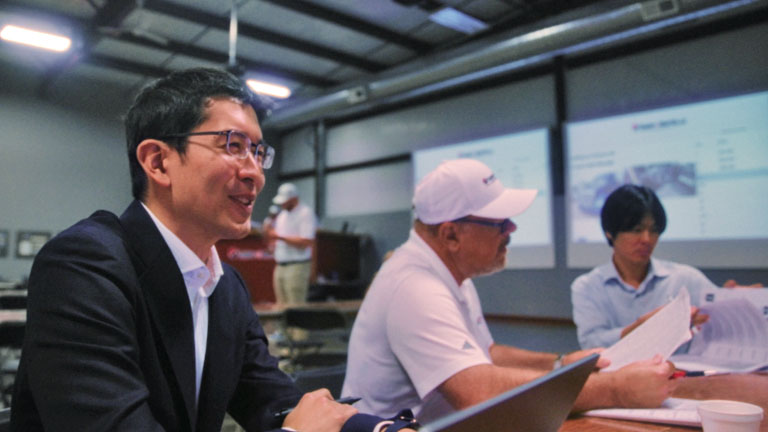
How do I see my DDM initiative developing in the future? The challenge we face is to do a global rollout of the successful models we've developed in the United States, while also introducing a qualitative change.
In the first stage of the DDM initiative, each group company develops their own value-creating analytics processes, and puts them on Mitsui's shared data platform. We've made solid progress in that area.
The next stage is a horizontal rollout. That means applying the same approach to data at more group companies, then figuring out how to link them up. This is when the strength Mitsui derives from having such a broad range of businesses should really come into its own.
Many US companies adopt highly specialized business strategies, something that makes Mitsui's approach of investing across diverse sectors appear quite unique by contrast. People often ask me about our raison d'être—questions like, "Why do so many different businesses coexist within Mitsui?" or "Why does Mitsui handle both business operations and investments under one roof?"
I want to answer those questions through the lens of data. As soon as you bring data into the equation, then diversified companies are well positioned to create value. For example, by sharing information and market signals across the supply chain, we can make strategic decisions that pure-play companies simply cannot. That's how I see it.
For example, our steelmaking businesses could potentially benefit from demand insights generated by our automobile businesses. Exploring opportunities to combine data across different businesses in this way—and create uniquely Mitsui "Combinatory Value"—is one of my goals.
Moving beyond Mitsui, another ambitious goal of mine is to contribute to the broader revitalization of corporate Japan. People often say that Japanese companies are good at hardware and operations, but less good on the software side of things. Now, though, software is being rapidly commoditized by AI and machine learning. The way I see it, the companies that stand to reap the greatest rewards from this trend are those with operational sites—such as factories and mines that can be revolutionized through the application of AI and data.
Mitsui has many traditional, non-tech business in its business portfolio. I think DDM represents a golden opportunity for such businesses because we can leverage our operational expertise to ignite innovation in a way that pure tech companies simply cannot. My dream is to use the power of data to transform how Mitsui operates. Hopefully, Mitsui can serve as a model case and trigger a wave of change across all corporate Japan.
Posted in August 2026