Employee Volunteer Activities
Employee Volunteer Programs
Yatsuda Regeneration Project
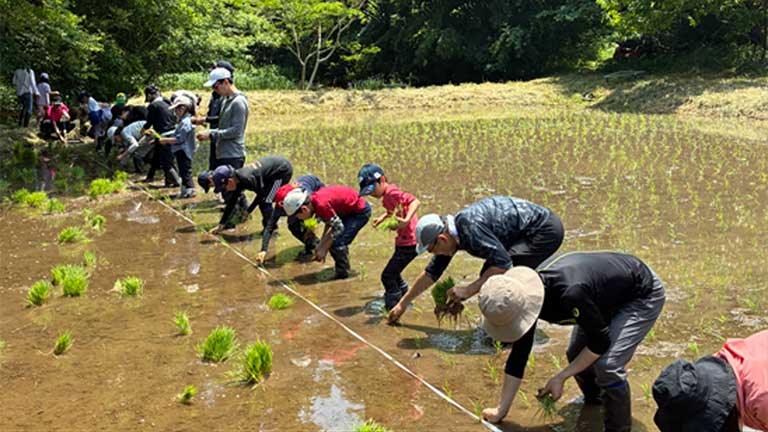
Yatsuda refers to a rice paddy in the valley of a low, hilly area (yatsu). Also known as yato or yachi, yatsuda is one of the landscapes of satoyama, (Japanese village forest), often seen in the Kanto and Tohoku regions. However, yatsuda paddies are now disappearing. The reasons include the difficulty in using machines for planting seedlings because of the irregular shape of rice paddies created in narrow valleys, the shortage of farm workers due to Japan's aging society, and the impact of housing development. Yatsuda paddies are artificial ponds. With surrounding forest areas, they foster the vitality of many plants and animals and create rich biodiversity, and the protection of such environment has been called for.
Asaza Fund (NPO) was a grant recipient of the Mitsui & Co. Environment Fund, and is promoting natural regeneration activities in the Lake Kasumigaura watershed. In cooperation with them, Mitsui & Co. is engaged in a project for regenerating deteriorated yatsuda paddies in Ushiku City, Ibaraki Prefecture, by growing agrochemical-free rice, and through other activities.
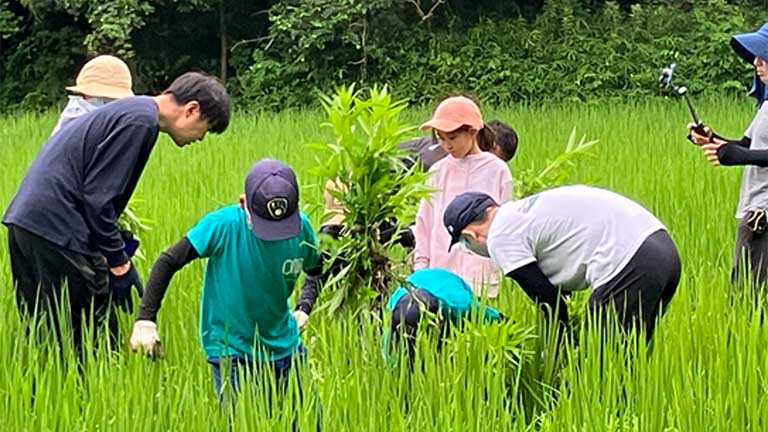
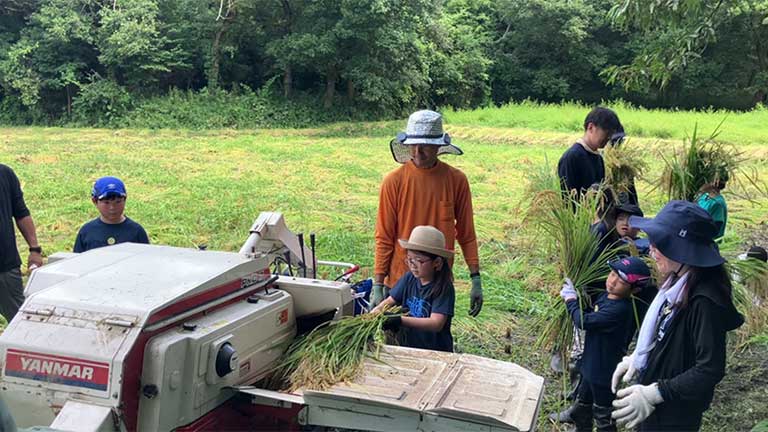
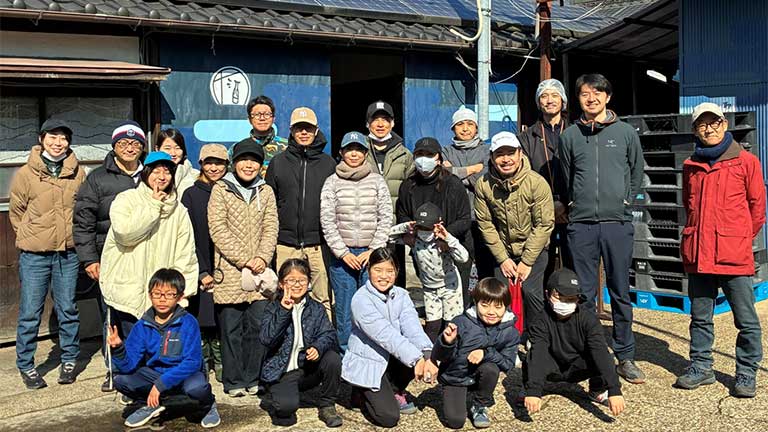
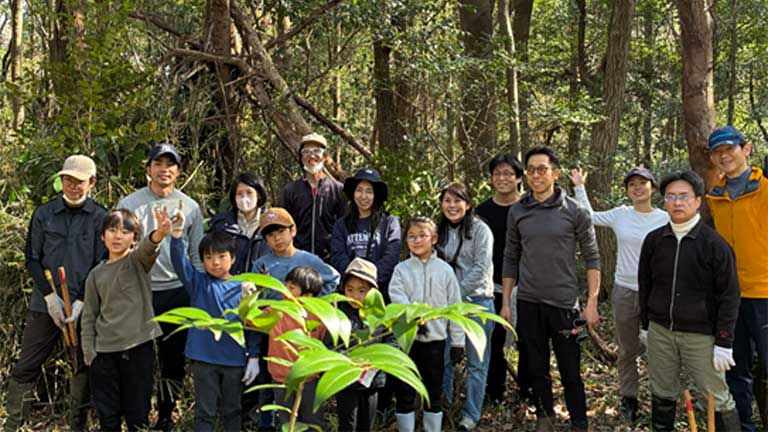
This project invites the participation of employees and officers, as well as their families, including those of our group companies. Participants visit the yatsuda paddies five times to plant rice, weed, harvest and even brew sake using the harvested rice. Since the project began in 2007, a total of more than 3,700 employees and officers and their families have participated. Alongside rice growing, the program also includes a survey of local organisms and firefly viewing, allowing participants to truly experience the regeneration of the ecosystems of the Yatsuda rice paddies and the results of natural capital restoration and conservation efforts.
As a result of long-standing efforts to restore satoyama landscapes*1 and conserve biodiversity, the area in which the collaborative initiative between the Asaza Fund and Mitsui & Co. is conducted in the satoyama area surrounding the water source in Ushiku was officially recognized as a Nationally Certified Sustainably Managed Natural Site by Japan's Ministry of the Environment for the first half of fiscal year 2024.
アサザ基金 X 三井物産 牛久の水源地の里山 (Japanese Only)
A Nationally Certified Sustainably Managed Natural Site refers to an area where biodiversity is effectively conserved through private-sector initiatives, excluding designated protected areas such as national parks. These certified areas are registered in the international database as OECMs (Other Effective area-based Conservation Measures) and contribute to the achievement of the 30by30 target*2.
Since 2025, as part of a Nationally Certified Sustainably Managed Natural Site, we have incorporated biodiversity monitoring experiences into our employee participation programs. By observing changes in biodiversity and the recovery of the satoyama environment, participants help visualize the progress of satoyama restoration efforts.
Through these activities, we aim to deepen employees' understanding of environmental issues and contribute to the creation of sustainable local communities.
*1 Satoyama refers to areas located between untouched natural environments and urban spaces, where human interaction has shaped unique ecosystems. These areas typically consist of secondary forests, managed woodlands, agricultural fields, ponds, and grasslands surrounding rural settlements.
*2 The 30by30 target is a global goal to effectively conserve at least 30% of land and marine areas as healthy ecosystems by the year 2030.