Discussion between Institutional Investors and an External Director
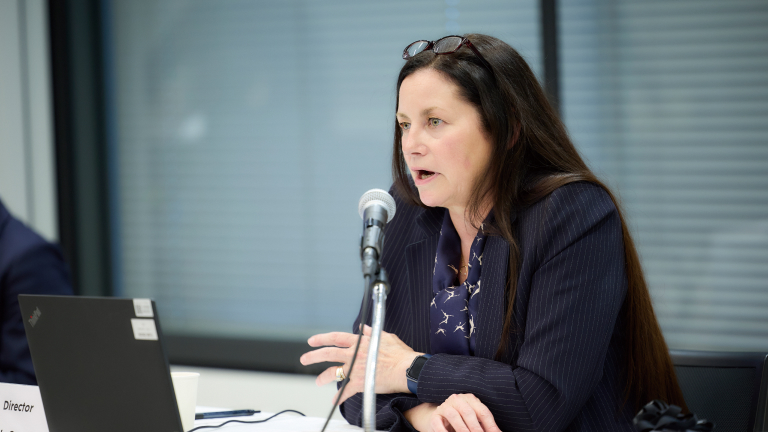
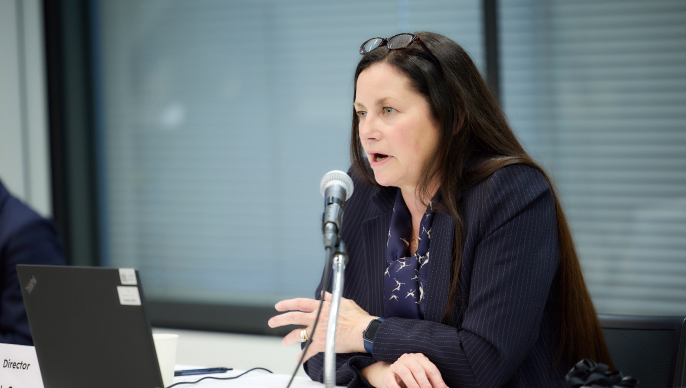
In June 2026, Mitsui External Director Sarah L. Casanova took the time to talk to representatives of about thirty institutional investors.
External Director
Sarah L. Casanova
Opening remarks
I have spent many years in management in the consumer business sector. Drawing on that experience, I now participate in Board discussions by leveraging my expertise and insights in consumer businesses and brand building.
Since joining the Board, I have been particularly impressed by Mitsui’s highly diversified portfolio, strong focus on people, and emphasis on long-term partnerships. By combining its investment discipline, risk management, and business development capabilities, Mitsui pursues sustainable value creation even in a rapidly changing environment.
Another aspect I find especially compelling is the never satisfied culture. I believe a mindset of constant commitment to continuous improvement, identifying new business opportunities, developing them, and then growing them, is deeply embedded throughout the organization.
What do you find particularly distinctive about the effectiveness of the Board of Directors?
At Mitsui, briefings are held up to the day before Board meetings, during which matters are explained in advance, and questions are addressed. Given the breadth of business domains, this process is extremely important. By addressing basic questions and confirmations beforehand, the Board can focus its time on meaningful discussion rather than routine matters and clarifications during the actual meeting.
Another interesting aspect is that presenters are not limited to business unit COOs. Members of the next generation of management who play key roles in each business area frequently make presentations as well. For External Directors, this provides an opportunity to become familiar with the people who may lead the Company in the future, while for presenters, it is valuable experience that helps them understand Directors’ areas of interest and develop a management perspective.
Site visits are also highly valued. For example, I have personally visited shale oil and gas projects in Texas, LNG projects in Louisiana, and the private hospital group IHH in Singapore. Many aspects cannot be fully understood through photographs alone. Seeing operations firsthand deepens understanding of the business and leads to more concrete and multidimensional discussions.
In addition, opportunities are provided for discussions exclusively among External Directors and External Audit & Supervisory Board Members. These sessions allow External Members with diverse experience and expertise to share perspectives and contribute to richer Board discussions.
The Board Secretariat also seeks ways to maximize the effective use of Directors’ time. Depending on the agenda, online meetings and written resolutions or reports are utilized, while topics that are considered particularly suited to in-person discussion are addressed through face-to-face meetings with sufficient time allocated for thorough deliberation.
I believe the value of a board lies not in approving proposals themselves, but in the discussions that lead to those decisions. At Mitsui, continuous efforts are made to ensure that Directors’ time is devoted as much as possible to matters that truly create value.
I also feel that management provides highly transparent information sharing to the Board. Regardless of formal criteria, matters deemed important for the Board to know are proactively shared, enabling deeper review, discussion, and decision-making.
The results of Board effectiveness evaluations also indicate broad alignment among External Members, and I believe Mitsui’s governance standards are outstanding.
How did External Directors participate in discussions during the formulation of MTMP2029?
The Board was deeply involved in the formulation process for MTMP2029. Starting with reviews of the business environment and continuing through discussions of the grand design, framework, draft versions, and finalization, the Board devoted substantial time to deliberations over multiple sessions.
External Directors contributed to these discussions based on their respective areas of expertise. There were also active discussions regarding digital transformation and AI, with Directors possessing expertise in digital fields raising numerous questions and recommendations.
These discussions are closely aligned with the concept of combinatory value presented in MTMP2029. Digital and AI are not viewed solely as tools for improving internal efficiency. They are also seen as enablers of entirely new business opportunities.
How do External Directors engage with management?
Our role is to ensure that management has thoroughly considered the truly important issues and to ask the necessary questions.
There have been cases in the past where the Board requested further review of risk assessments in order to gain an accurate understanding of the risk profile of a project. In such instances, management openly accepted this feedback and conducted additional analysis. As a result, the project was ultimately advanced in a more effective and robust manner.
Each External Director brings different experiences and expertise. One of our roles is to introduce diverse perspectives and prevent groupthink, where discussions become biased toward a particular way of thinking.
Differences of opinion certainly exist, but they are not confrontational. Rather, they form part of constructive discussions aimed at achieving better decision-making. Management is highly receptive to feedback from External Directors, and insights gained through these exchanges are reflected in actual management decisions and business operations.
How do you view Mitsui’s sustainability initiatives as an External Director?
I believe that a commitment to addressing social issues as a responsible corporate citizen is deeply ingrained throughout Mitsui. Sustainability is a core theme within that commitment, and I view it as something that should be pursued from a longterm perspective rather than being influenced by short-term environmental changes.
The Company has established various targets, including GHG emissions reduction goals, and is steadily working toward their achievement.
I also feel that Mitsui’s emphasis on integrity as the foundation of business operations is firmly embedded across the organization. The principle of doing the right thing extends from top management throughout the entire organization and is practiced in all aspects of business operations.
Health and safety are prioritized consistently, not only for employees but also for business partners and all those involved in Mitsui’s businesses.
Could you share a specific example of how you have experienced the never satisfied corporate culture?
At Mitsui, it is natural for people to continually seek ways to improve projects and business initiatives by asking, “Can this be done better?” and “Can more value be created?” This mindset is also evident in the operations of the Board.
Even compared with when I first joined, the Board today operates differently and more effectively. For example, discussions continue regarding whether all meetings need to be conducted in the same format and whether more efficient approaches are possible.
The essence of never satisfied, as I see it, lies precisely in this commitment to never being content with the status quo and continuously pursuing improvement.
How do you view Wellness Ecosystem Creation 2.0, one of the strategic initiatives outlined in MTMP2029?
Interest in wellness is growing globally. People are becoming more focused on prevention compared to treatment, and wellness today encompasses not only physical health but also mental and emotional well-being.
Mitsui already has significant assets in the IHH hospital network and valuable data generated through those operations.
The key question is how to utilize them and connect them to new business opportunities together with the right partners. For a company with Mitsui’s broad business platform, I believe there is significant potential in this area.
In terms of profitability, business areas where Mitsui already possesses expertise and a strong business foundation may contribute earnings relatively quickly. It is important to create new sources of earnings and grow them over time, by combining assets, data, technology, and partnerships.
Mitsui has historically been a B2B company. How do you believe those strengths can be leveraged in future growth areas?
I agree that Mitsui has historically been a B2B company. At the same time, I do not view B2B and B2C as fundamentally different. Even in B2B, the companies with which Mitsui conducts business are its customers. Whether the counterpart is an individual consumer or a corporation, the basic principle remains the same: understanding what customers want and what they need.
In B2C businesses, data and insights at the individual consumer level become more important. Personnel and teams working in businesses closer to consumers have already accumulated expertise in these areas. Furthermore, Mitsui has long-established strengths in building partnerships and developing businesses, which I believe will allow it to demonstrate its capabilities fully in these fields as well.
How do External Directors and the Board contribute to enhancing business value after investments are made?
As an External Director, I have a strong interest not only in new investment opportunities but also in the initiatives being undertaken to enhance the value of existing businesses. For that reason, we ask each business unit not only to explain new investments but also to provide updates on the status of middle game initiatives in existing businesses.
How is business value increased after an investment is made? What improvements are being pursued on an ongoing basis? The Board continuously seeks to understand and discuss these efforts. I believe this concept of middle game initiatives is one of Mitsui’s distinguishing characteristics. It is important not simply to make investments but to continue pursuing value enhancement afterward.
What do you see as the key challenges for Mitsui to achieve further growth?
One area I continue to view as important is diversity, particularly gender diversity. This topic is discussed repeatedly at the Board.
In areas such as Wellness Ecosystem Creation, perspectives from women can be directly linked to identifying business opportunities and understanding customer needs. Incorporating diverse viewpoints into management and business operations can also strengthen competitiveness.
Diversity is not simply a social objective—it is a business opportunity that can help Mitsui continue to grow and flourish.
What qualities are required of Mitsui’s leaders?
Leadership is about both what you do and how you do it.
Candidates for leadership roles at Mitsui are generally already capable in terms of “what.” They naturally possess the ability to think about how to grow businesses and where to invest.
What I consider even more important is the “how.” How do they lead people? How do they bring out the full potential of the organization? How do they instill the values that Mitsui holds dear—including people, integrity, and health and safety—throughout the organization?
In the past, I often used the phrase shadow of the leader. A leader’s influence grows as they move into more senior positions. Their actions, words, and values spread throughout the organization, for better or worse. That is why integrity and people leadership are so important. Employees watch what leaders do, not just what they say. The best leaders create environments where people can perform at their best while remaining true to the Company’s values.
Closing remarks
I learned a great deal from your questions, understanding the areas that are most important to you as investors. Your perspectives are extremely valuable, and I will take those insights back to the Board.
Investor dialogue is an important part of ensuring that we continue to improve not only our communication, but also our understanding of the expectations placed on Mitsui.